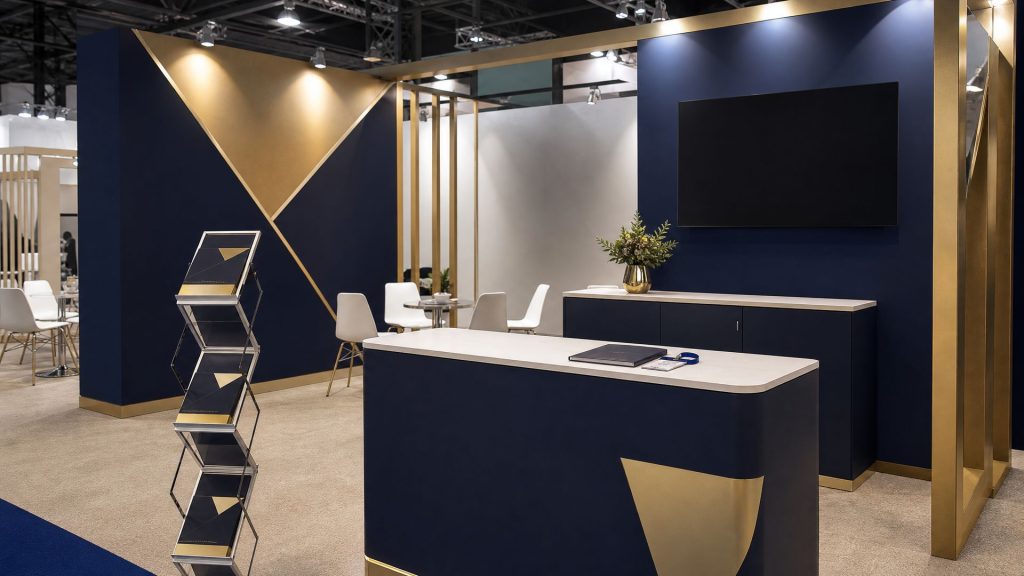
Treat the Canton Fair as a filing deadline, not just a sales trip. A booth puts your brand, your packaging and your product in front of thousands of buyers and a good number of copyists, and the complaint desk works only for rights registered in China. If you are booking for the autumn session, the filing should already be in.
What the fair does to a brand, in three moves
The China Import and Export Fair runs twice a year in Guangzhou, in spring and autumn, each session in three phases. It is the largest sourcing event in the country, and for an overseas brand manufacturing in China it is the week when your product is most visible and least controlled.
Three things happen, usually in this order.
- Your product is photographed, measured and catalogued. Buyers do this openly, and so do competitors, often within the first hour of the show opening. A design that was protected only by obscurity is now public.
- Your brand appears in a catalogue and on a website. Booth signage, the paper catalogue, the online matchmaking profiles and the exhibitor lists all carry your name. Some of those records stay online for months.
- In the weeks after the show, a filing appears. The fair is one of the most reliable signals a squatter uses, because the exhibitor list is published, dated and searchable. We see filings that land within days of a session closing.
None of that requires you to sell a single unit into China. The fair is exposure to a domestic audience with a domestic register, which is exactly the situation the export manufacturing guide describes. And the filings that follow a fair are often made by a party that had access to your product, which is the pattern in stopping a manufacturer from taking your brand.
At the fair, with a registration and without one
| Situation on the floor | Brand with a Chinese registration | Brand without one |
|---|---|---|
| A nearby booth is showing a copy of your product | Complaint to the fair’s intellectual property desk, with the certificate in hand. The desk can ask for the item to be withdrawn from display | The desk has no right to act on. The item stays on the floor for the week |
| Your own booth is accused by someone else | You can show the certificate, the registration number and the goods list, and keep trading while the desk checks | You have nothing to show, and the desk will usually ask for the item to come down |
| Your product design is copied from the show | If a design patent is granted or filed around the show, you have a right to rely on. Design filings and trademark filings run on separate clocks | Public disclosure narrows your options, and the narrow grace period provisions are not something to plan around |
| A buyer asks whether the brand is protected here | You answer with a number and a class | You explain, and the conversation moves on. Some buyers read that as risk |
The second row is the one owners never plan for. A Chinese registrant can complain about your booth, and the desk will look for documentation of rights. A foreign certificate or a trademark attorney’s letter from your home country will not be accepted as a basis for the complaint, and the practical result is that your display comes down while the dispute is unresolved.
How the complaint desk actually works
The fair runs an intellectual property complaint and mediation service on site, staffed with officials from the market regulation and intellectual property authorities. It is a real procedure with a real effect on the floor, and it is procedural rather than judicial: it decides whether a display or an item stays up, not who owns what.
To file a complaint you bring the right itself. In practice that means the registration certificate, the registration number, the classes and goods list, and identification for the party filing. Where the mark is owned by your overseas company, bring a power of attorney or a document showing who is acting for the owner. Where the copy is of a design, a granted Chinese design patent is what the desk looks for, and a pending application usually gets you a note to come back when it grants.
Two things make the difference between a five-minute complaint and an hour of argument. First, the certificate has to match: the mark on your booth has to be the mark on the registration, in the class that covers the goods on display. Second, you have to be present or represented at the fair, because the desk is a physical office with a schedule, not an online form. We prepare the documents so a client carries a folder rather than a promise.
The disclosure side, which is easier to get wrong
A trade fair is a public disclosure. For designs, that matters more than owners expect. Chinese law provides only narrow grace periods, and the exceptions depend on the exhibition qualifying under the relevant rules, plus a filing made soon afterwards. None of that is a plan; it is a rescue attempt.
The straightforward course for an exporter preparing for a session is this: file the trademark in the classes you exhibit, and file the design patent, before the show opens. A design that is already in a Chinese application or grant is not destroyed by the booth. A design that is first shown at the fair relies on an exception and on timing you do not control. The product side is covered in design patents against copycats and in the design patent guide for sellers.
Before you book the booth
- Search the CNIPA register in the classes you will display, before the product is in a catalogue. Ours is free of charge.
- File the trademark in your own name, in every class on the stand, not only the flagship product class.
- Decide whether the product design is worth a Chinese design patent, and file it before the show if it is.
- Bring the certificates in hard copy and keep the registration numbers in one place. A folder, not a cloud link.
- Bring evidence of first use with dates: invoices, product photographs, the catalogue from the previous show.
- Photograph your own booth and any copying you see, with a timestamp, during the session.
- Check the exhibitor catalogue for booths near yours and note which names they are showing under.
- After the show, search the register again. Filings that follow a fair land within weeks, and the three-month opposition window is the cheapest moment to act.
That last line is why monitoring exists. A brand that searches once a year will find a squatter’s registration after it has registered; a brand that checks every few months finds the application while it is published and can still oppose. Ours is US$399 per year and covers the classes you hold, with the mechanics in trademark monitoring.
A six week run up to the session
| When | Action | Outcome |
|---|---|---|
| Week 6 before the show | Free search of CNIPA records in the exhibit classes | You know whether the name is available and which neighbour marks exist |
| Week 5 | Final goods lists agreed, power of attorney signed, invoice paid | Nothing is waiting on you when the applications are ready to go |
| Week 4 | Applications filed, one per class, application numbers issued | You are on the register before the booth opens, and you can show a filing number in Guangzhou |
| Week 3 | Design patent evaluated and, if wanted, images prepared | The product design is covered by its own application rather than by the show |
| Week 1 | Documents folder assembled, complaint procedure understood | You know what to do at the desk and who signs for the owner |
| Show week | Booth photographed, complaints filed same day if needed | Copying is documented while it is visible |
| Weeks after | Register searched again | Any opportunistic filing is caught inside the opposition window |
Timing note that matters in practice: a trademark application is not a registration. If you are six weeks from a show, you can have an application number in hand, which is what most complaint desks and most platforms ask for at that stage, but the grant comes later. Sellers who book the booth in January for the spring session are comfortably early. Sellers who decide in September for an October session can still file, and should, but they will be filing as an exhibitor rather than as a registrant.
Quick answers
Do I need a Chinese trademark just to exhibit?
No, and plenty of exhibitors turn up without one. What you cannot do without one is use the fair’s complaint procedure, and that is the procedure that removes a copycat’s display before the week is out.
Can I complain at the fair using my US or EU registration?
No. The desk works on rights that exist in China. An application filed here can be relevant in some situations, but the certificate is what the procedure is built around.
Will my booth display destroy my design rights?
It creates a disclosure, and China’s grace period provisions are narrow and conditional. File the design before the show and the question does not arise.
Where does the fair take place, and when?
Guangzhou, twice a year: the spring session runs through April and May and the autumn session through October and November, each in three phases by product category. The full calendar is published on the Canton Fair website.
What if someone files my brand in the weeks after the show?
Watch for it. An application is published for opposition before it registers, and you have three months from publication. This is the single most useful thing a monitoring subscription buys you.
Is a trademark enough to stop a copyist at the fair?
For the name and the logo, yes. For the shape of the product, you need a design patent. The two protect different things and are filed separately, which is why we plan them on one calendar before a session.
Sources
China Import and Export Fair (sessions, phases and the on-site intellectual property complaint service); Articles 31 and 33 of the PRC Trademark Law (first to file and the three-month opposition window); Patent Law provisions on public disclosure and the narrow grace periods; CNIPA. General information, not legal advice. What a complaint desk will do on a given day depends on the documents and the facts, and outcomes rest with the authorities.
Get the certificates in hand before the booth opens
Tell us the session you are booked for and the classes you will display, and we will run the search and confirm what needs filing and by when. If you are already registered, we will check the certificate against your exhibit list so the booth, the catalogue and the register all say the same thing. Filing starts on the registration service, prices are on the pricing page, and the free search begins with a message to us.