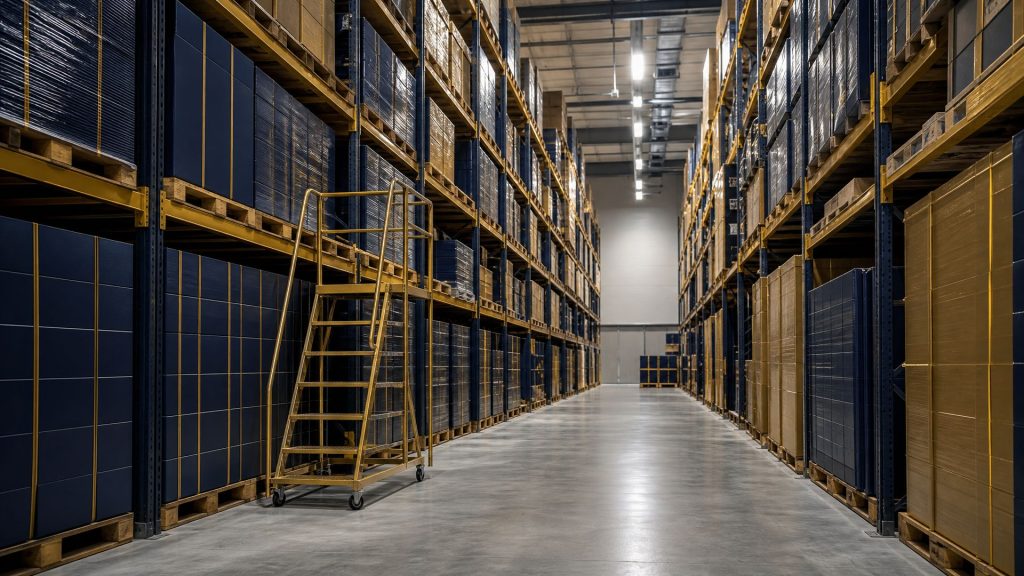
Storing goods in China does not by itself require a Chinese trademark. What it does is put your goods, your packaging and your brand inside Chinese territory, which is where the risks this cluster is about all live. The filing requirement depends on one question: are you offering the goods for sale in China, or just holding them before export?
The situation, separated into four arrangements
“Storing goods in China” covers four quite different setups, and they do not carry the same consequences.
| Arrangement | What it is | Does it put you in the Chinese market? |
|---|---|---|
| Factory holds finished stock before shipment | The ordinary case. Goods are yours under contract and awaiting a booking | No, provided nothing is offered for sale here |
| Bonded warehouse or free trade zone | Goods held under customs supervision, duty suspended, awaiting export or re-export | No, while the customs status holds and the goods are not sold domestically |
| Export supervised warehouse | A facility for goods declared for export, consolidated before shipping | No, for the same reason |
| Third-party fulfilment for Chinese buyers | Stock held by a logistics partner and shipped to customers in China | Yes. You are selling in China |
The dividing line is not where the pallet sits. It is whether the goods are being offered to buyers in China. Storage is a customs status. Selling is an act in the market.
Why the distinction matters for trademark purposes
Two concepts sit behind the question, and they get mixed up.
Use in China. Whether a mark is used in China affects whether a registration can be cancelled after three consecutive years of non-use, and it affects infringement analysis. Production and packing in China, and storage here, are acts that take place in China, and Chinese practice has treated export-oriented OEM production as use of a kind even where nothing is sold domestically. The position has been fact-specific, which is why we advise keeping the documentary chain rather than relying on the answer.
Offering for sale in China. Listing the goods on a Chinese platform, quoting a Chinese buyer, or shipping to a Chinese address is domestic commercial activity. Once that happens, the export-only reasoning stops helping you and the ordinary rules apply.
When storage makes the filing necessary
Four situations, all of which we see regularly.
- Your stock sits on a third party’s premises under your brand. The logistics partner, the warehouse operator and its staff can all see the label. That is exposure of exactly the kind a factory creates, and the filing is what protects the name on the cartons.
- You are consolidating for several buyers. Multiple parties see the goods, the packaging and the brand, and a mix-up on a pallet puts your goods in front of the wrong buyer.
- You are considering selling domestically, or using unsold stock that way. A bonded status that converts to domestic sale, or an online shop opened from the warehouse, turns a storage arrangement into a market entry.
- Someone else has recorded your name at customs. Storage makes detention visible: your goods are in one place, labelled, and waiting. A registration of your own plus a recordal is the countermeasure.
What we recommend when stock is held in China
- File in the classes on the cartons, not only the classes you sell in. Where packaging is printed, the box can be in a different class from the product.
- Keep the export evidence. Warehouse receipts, customs declarations, bills of lading, orders, invoices. This is the material that supports your position if anyone questions it.
- Record the mark with customs once it registers. US$199, no official fee, and it covers exports as well as imports.
- Get the arrangement in writing. A warehouse or fulfilment contract that names you as the owner of the goods and the mark, and that controls who may sell or repurpose the stock. Agreements like this are covered in whether an OEM contract is enough.
Quick answers
Do I need a Chinese trademark to keep stock in a bonded warehouse?
No purely for storage. You need one because the goods, the packaging and the brand are inside China and visible to others, and because a registration is what customs, platforms and complaint desks act on.
Does storing goods in China count as using the trademark?
The more relevant point is that production and packing are acts in China, and Chinese practice has treated export-oriented OEM production as use of a kind. Storage alone is thinner, and the position is fact-specific. Keep the documents.
Can I sell from a bonded warehouse into China?
Bonded status is about customs duty and timing. Selling domestically from that stock is a domestic sale, and the ordinary trademark and compliance rules apply at that point.
What if a third party has recorded my mark at customs?
Your shipments can be detained while you prove authorisation. File your own registration if you do not have one, and record it as soon as it grants. Detention mechanics are in customs recordal.
Does the warehouse need to be in my name?
Not necessarily, but the goods should be documented as yours, and the contract should say what the operator may and may not do with them.
Sources
Article 31 of the PRC Trademark Law (first to file) and Article 49 on cancellation for three years of non-use; Supreme People’s Court, PRETUL, (2014) Min Ti Zi No. 8 and later decisions on OEM production for export; the Regulations on Customs Protection of Intellectual Property Rights and General Administration of Customs guidance on bonded and supervised storage; CNIPA. General information, not legal advice. Customs and trademark questions turn on the facts of the arrangement, and outcomes rest with the authorities.
Tell us how the stock is held
Describe the arrangement, the operator and where the goods go, and we will tell you which classes to file and whether the storage creates anything to document. The register search is free; filing starts at US$199 per class with the CNIPA official fee included, and a message is enough to begin.